Written for publication at UnderPinned.co:
https://underpinned.co/2018/10/theatre-review-wise-children-at-the-old-vic/
CW: On-stage suggestions of sexual abuse, miscarriage, and incest.
Reworking Angela Carter’s 1991 novel Wise Children, Emma Rice’s theatrical imagining of the text is an explosive ode to the carnivalesque and a sensuous, bohemian feast of a pantomime. It’s a haunted fairytale which explores the shades between good and evil with darker moments offset by nostalgic musical numbers. The scene is a Brixton car-park in 1989 and our protagonists are twin sisters Dora and Nora Chance, accompanied by a gaggle of pastel-coloured mime artists and leggy thespians. A live band play a bewitching score in an alcove behind the centre-stage caravan and beneath the bulb-lit lettering of ‘Wise Children’, keeping guard of the pair. We meet the sisters on the day of their 75th birthday when they are unexpectedly delivered with an invitation to a birthday party from their estranged father, the actor Melchior Hazard. ‘There may be trouble ahead!’ the company croons, and the narrative sketches their complex and adulterous lineage, through which we meet a diverse host of eccentric and extraordinary members.
The importance of Shakespeare to the text is an intriguing thread which certainly feels appropriate given the timings of Rice’s departure from the Globe theatre. There’s a disdain for convention and a playful approach to gender and role-swapping with Ankur Bahl playing both the young Melkior and, later, the bratty female RADA student with whom Melchior has an affair. Katy Owen’s portrayal of the bawdy Grandma Chance is particularly worthy of praise and nothing short of comic brilliance. She has a stubborn disposition and as the parental guardian of the young girls, she spends her days drinking stout and delivering life lessons to the girls, most of which are conducted whilst Owens dons a plump (nude) fat suit with tastefully bejewelled areola and pubic region. The play’s set and costume design, overseen by Vicki Mortimer, is a visual pleasure, wonderfully camp and charmingly mismatched; wigs poorly fixed with sagging lace-fronts; ungodly high-waisted trousers and lashings of gender-bending and breaking. The musical number at the beginning of the second act confirms this as they sing, “Girls will be boys when they want their own way . . . there’s a sudden realization at the end of the play, that we’re all a bit distracted by the choice of passageway!”. This is Rice at her absolute finest.
Showing posts with label london. Show all posts
Tuesday, 16 October 2018
Theatre Review for UnderPinned freelancing magazine; Mrs Dalloway at the Arcola
Written for publication at UnderPinned.co :
https://underpinned.co/2018/10/mrs-dalloway-at-the-arcola-theatre/
This adaptation of Virginia Wolf’s Mrs Dalloway isn’t for everyone. For some, it is a chaotic and claustrophobic clamour of self-indulgent Modernism. For others, it is a chaotic and claustrophobic clamour of self-indulgent Modernism. Attending to Virginia Woolf’s essay ‘Mr. Bennet and Mrs. Brown’, Hal Coase deduces that the text’s primary occupation is that of character formation, with an eye to Woolf’s distrust of “theatrical moments which might deliver the ‘final’ truths of life”. Drawing upon the rich catalogue of writings on and by Woolf, her eccentric creations are tastefully draped in muted beige linens with a background of white drapes. It’s minimalist to the extent that it habitually relies on narrative descriptions to project the image of London. Coase’s refusal to wholly visualise the setting is an abstract and painterly decision which is in keeping with the expressively experimental sentiment of the text but is also, albeit, a little lazy.
Before we meet Clarissa (Clare Perkins), the rest of the cast sketch her character by listing her traits until they grow restless at the redundancy of language and limits of knowledge. “There is never enough of someone to make a judgement”, they surmise. The four cast members disperse like birds into the four corners of the room, playing metropolitan ‘found-sound’ on cassette players in a contemporary flourish. Thus, the character of Clarissa Dalloway is born, clutching (fake) flowers, which she bought herself, against an Yves-Klein-blue canvas; one of few temporal markers. Later, a cloudier canvas is brought out to indicate the fading light.
There are several instances of wrongly executed and misspoken lines and the shaky synchronisation feels indicative of insufficient rehearsal. Despite this, there is a supremely accomplished and nuanced performance from Moody who brings surprisingly humorous tones to the characters of Miss Killman and Mrs William Bradshaw. D’Arcy’s monologue as Rezia is also worthy of note, her musical Italian timbre summoning audience tears as she pleads for her shell-shocked husband’s sanity. In its denouement, the play pulls together its aphoristic threads in the aftermath of Septimus’ death. “To love makes one solitary”, is one, “the people we are most fond of are no good for us when we are ill”. In this, the cynicism of Woolf’s earlier mentioned distrust for theatrically delivered truths is lost, operating more as moral lessons than sardonic phrases.
Whilst it might not be as beautiful as Woolf’s prose, Coases’ theatrical imagining of Mrs Dalloway must be credited for its ambition in adapting such a well-loved canonical Modernist text. The adaptation might not be a meticulous reiteration of the original, it’s every bit as cluttered and befuddled as urban life has always been.
Labels:
adaptation,
arcola,
clarissa dalloway,
dalloway,
dalston,
drama,
journalism,
london,
magazine,
modernism,
mrs dalloway,
play,
review,
theatre,
underpinned,
underpinned.co,
virginia,
woolf
Monday, 6 August 2018
Selected Verse: Interview with Poetry Anthology Founders- Edward and Elinor
An interview in [smiths] magazine with Dora Hemming, discussing our first volume of poetry and plans for our future second volume and open call, with co-founding Editor, Edward Green.
Dora Hemming talks 'bravery, cabbage, fish cakes and a sound rejection of nostalgia' with founding editors of poetry anthology Away With Words Selected Verse, Edward and Elinor
- www.smithsmagazine.co.uk/2018/08/04/selected-verse-interview-with-poetry-anthology-founders-edward-and-elinor/
Dora Hemming talks 'bravery, cabbage, fish cakes and a sound rejection of nostalgia' with founding editors of poetry anthology Away With Words Selected Verse, Edward and Elinor
****
‘You’ll hear people say ‘Poetry is Dead.’ You’ll hear people say ‘Millennials don’t have direction’ or ‘Youth culture is all spectacle, no substance,’ you’ll hear people bemoan the younger generation as ‘out of touch,’ ‘self-obsessed,’ ‘sensitive snowflakes,’ who are ‘cut off from the real world,’ too busy with their ‘social media,’ their ‘avocado toast,’ their ‘kneejerk Corbynism’ and their ‘athlesisure fashions,’ to really care about, confront, or change, the true realities of the world around them. This anthology proves those poisonous statements, and all like them, violently, dizzyingly wrong. In this collection you’ll see student writers demonstrating deft understandings of the complications of gender, representation, politics, family, class, identity, wealth, art and community that we all face. These young people, in their diversity and multiplicity, are taking on the issues that matter without didacticism: sensitive to feeling and instinct, and at the same time unafraid of the visceral reality of lived experience.’
– Rebecca Tamás, 2018
What made you want to set up a new poetry anthology, is there space in the market?
Our desire to create Away With Words Selected Verse was birthed out of our respective experiences in the arts and publishing, a love for poetry and the creative spirit of Goldsmiths and those around us. Our collection attempts to compile and celebrate a small percentage of these voices, irrespective of the ‘marketplace’. If we were more market-oriented, we might not offer our contributors monetary prizes for their contributions. We’re a self-funded publication and this money quite literally comes out of our pockets, but it’s an important gesture which underscores the value of artistic products and our appreciation of excellence.
Do you think your last publication succeeded in reflecting South East London?
No, because we didn’t set out to ‘reflect’ South East London in the last publication. Even our initial working title of ‘Selected South London Verse’ was not done out of a motivation to showcase or highlight a South London-centric selection of authors. We both just happen to live here, study here, get pissed here and make most of our friends here. So although the first volume was primarily put together with work from (pseudo-)South Londoners, that was only the case because the majority of authors and writers we knew were from that area.
In our second volume, however, we have very much fled our nest, crossed the pond, bucked the trend, etc. and expanded the open call pretty much nation wide. We’ve been distributing our posters (tentatively) to universities around the country through post, and internationally via instagram and other phantom social media. We think the primary focus of our first volume was to piece together an interesting and original selection of responses to our first theme; liberation. In this, we hope we succeeded.
Talk to me about your last event. It must be different hearing the poems spoken to an audience compared to on the page…
The launch event for the first volume was a terrific night, it definitely exceeded both of our expectations. Out of the Brew arts café in New Cross hosted it, which has a capacity of 40 people or so, as well as a tight, white box-room underneath it where we held the readings. A selection of our successful contributors, as well as our mystery-guest, Faber poet, Lord and Saviour; Jack Underwood, were invited to read pieces from the publication and their own private annals. There ended up being over 100-odd people trying to get in! People were taking shifts at coming down to catch some of the readings, and then running up for air and a quick cocktail because it was so packed downstairs! We also sold copies of the first volume upstairs, which didn’t actually arrive until literally an hour before the event started. This motivated Edward, one half of AWW, to scribble down and read out a quick new piece berating the inadequacies of the British postal service.
It truly was a bloody delight to meet the people we’d been corresponding with, and especially those who we didn’t know already and had discovered through a random online submission. For our next launch event (mid to late-October) we plan to book a bigger venue, as well as invite down some more special guest readers to speak, some of which we have already been in talks with…
For this volume you have decided on the theme ‘legacy’, whereas the last publication asked contributors to respond to a theme of ‘liberation’. What is your reasoning behind being insistent on submissions relating, albeit loosely, to a specific theme?
Having both come into this project relatively clueless as to how to piece together a succinct collection of poetry, we both agreed that by implementing a loose theme we could ensure that whatever the outcome, the publication would offer some coherence as a body of work. As Rebecca Tamas expressed so deftly in her foreword to our collection, “If poetry has the potential to be liberatory, it is not because it convinces us of certain political arguments or tells us specific things to believe, but because its utterances enact and express liberation in themselves.” Politically, the word ‘liberation’ seems to have gone out of fashion (lest at least for some notable figures), so we thought that it would be an apt starting point for inviting authors to submit.
What do you look for in a poem?
Bravery, cabbage, fish cakes and a sound rejection of nostalgia. More than anything, we want Away With Words to be a poetry anthology that’s not only ambitious and forward-thinking, but also readable and enjoyable to anyone silly enough to pick it up.
We have absolutely no requirements for who can submit, and approach the editing process in a similarly inclusive way. The majority of our pieces tend to reject some sort of poetic tradition (rhythm, metre, subject, format), though not in a particularly conscious or brash way, but more naturally; through the author’s genuine inventiveness.
Can a shitty person write a good poem?
Without attempting to define ‘shitty’, in what could easily be a Partridge-esque few sentences, we think that this question boils down to that whole argument of whether we should separate the artist from their art. In our opinion, the two are intrinsically linked due to the presence of capital and the system of late capitalism in which art is produced. Through investing in, consuming, appreciating and sharing the art of a ‘shitty’ person, we put money in their pockets and indicate we’re still happy to support and encourage their continued, collective ‘shittiness’ (objectifying views). A shitty person has the freedom to do whatever they like but it doesn’t mean that we’re going to buy it. Thankfully, to our knowledge, we have not published any poems written by credibly ‘shitty people’. But we hope that in a sense, our readers will recognise within the stanzas of the poems we select a sound rebuttal of shitty people in everyday life.
Are male, big dick energy poets a problem in the arts?
Surprise, surprise, patriarchy and misogyny pervades all sectors of society, including the arts and as we all know, there is a great deal of privilege afforded to cisgendered white men. We’re not convinced that we are clued-up enough to comment on the wider systemic problem of big-dick energy in the arts in a brief capacity, but within our own publication we actively encourage submissions from people from all walks of life to ensure we aren’t just masturbating the fantasises of the big dick-ers. Whilst we haven’t implemented measures to promote diversity and inclusivity, this is something we are considering for the next edition. We’re hot on striking an equal male/female balance in our submissions and readings and luckily our successful contributors have been close-to 50/50. This considered, we assess our submissions on the basis of quality, so it’s difficult as a small-scale publication to implement inclusivity measures/a quota of LGBTQ+/POC voices when we don’t receive the same number of submissions as a larger publication such as Granta or the LRB. Nevertheless, it’s something we’d like to work towards as it’s close to our hearts.
Tell us a bit about your publisher, Toothgrinder
Toothgrinder Publishers was created by one half of Away With Words, Edward, and his brother William. The publishing house, founded in late 2017, specialises in poetic and photographic releases, and draws on both of brothers’ varying skills in writing, designing and promotion. Each publication is meticulously reviewed before publication to ensure, above all, that it has a genuine, meaningful idea to express.
If you had to recommend an anthology/poetic works to a poetry “first timer” what would it be?
Perhaps something like The Mersey Sound by Roger McGough, Adrian Henri and Brian Patten. As a poetry ‘anthology’ it seems to work on all the right levels. Each poet, though primarily different in their choice of subject, has a readable, likeable approach to writing. There is a wonderful balance between levity and brevity throughout, where one feels inclined to succumb to that age-old cliché of crying and laughing at the same time.
Pam Ayers and Wendy Cope are also great for younger readers due to the accessibility of the language and the self-deprecating humour. Emily Berry’s Stranger, Baby (2013), Rebecca Tamás’ Savage (2017) and Jack Underwood’s Happiness (2015, all Faber), are also excellent choices which tread the lines of more experimental poetry. Goldsmiths-alumni-creations clinic and Stop Sharpening Your Knives certainly aren’t bad places to start either.
Submissions for Away With Words, Volume 2 close on August 31st 2018
To submit, or for any information, email daotherside@hotmail.com
Away With Words Selected Verse is co-edited by Edward Green and Elinor Potts
@awaywithwordssv
@nedgreen
@eldpotts
https://t00thgrinder.tumblr.com
Words, Dora Hemming- @dora.ac.uk
Labels:
anthology,
away with words,
away with words selected verse,
awwsv,
collection,
edward green,
elinor potts,
english,
goldsmiths,
jack underwood,
journalism,
london,
poems,
poetry,
rebecca tamas
It’s never too late to be a stand‑up comedian: Before They Were Funny. Byline in The Times T2 Magazine 3/08/18
This article was written for The Times 'T2' Magazine whilst undertaking a week-long work experience stint in Central London. It was published online and printed in the national newspaper: images attached.
***
- https://www.thetimes.co.uk/article/its-never-too-late-to-be-a-standup-comedian-h87x3rp7m
BEFORE THEY WERE FUNNY
Greg Davies was a teacher in secondary schools in Berkshire and Twickenham for 13 years. When asked if he’d consider going back to school, Davies said: “After everything I’ve said about teaching; the profession wouldn’t have me back.”
Harry Hill trained as a doctor at Doncaster Royal Infirmary. Hill told Celeb Now in 2013: “I spent my whole time as a doctor hoping no one was going to get ill.”Peter Kay worked in supermarkets, petrol stations, a cinema, a bingo hall and a toilet-roll factory in his native Lancashire, which influenced his comedy writing in series such as That Peter Kay Thing. Kay later said: “I never settled because I wasn’t meant to pack toilet rolls or stack shelves . . . I was destined to make people laugh.”
Lee Evans had a brief stint as a boxer and tried out as a drummer in punk-rock band before he made the switch to stand-up in the 1990s.
Sarah Millican was a civil servant at a job centre until 2004. She was named best newcomer at the 2008 Edinburgh Festival Fringe and released her first book, How to Be Champion, last year.
Jimmy Carr underwent a turbulent loss of his Catholic faith in his late twenties while working in marketing. He then trained as a therapist after his experiences with psychotherapy, before turning to comedy.
Elinor Potts
Jimmy Carr underwent a turbulent loss of his Catholic faith in his late twenties while working in marketing. He then trained as a therapist after his experiences with psychotherapy, before turning to comedy.
Elinor Potts
Labels:
byline,
comedy,
edinburgh,
internship,
journalism,
london,
the times,
times,
work experience,
writing
Sunday, 20 May 2018
Review: Mood Music at the Old Vic for AYT
Propelled by the anxious collision of psychological expression and repression, Mood Music interrogates the boundaries of creative ownership and the extent to which we are emotionally invested in our artistic products. Written by Joe Penhall (Sunny Afternoon, Blue/Orange) and directed by Roger Michell, the piece chronicles the ego-clash of producer Bernard (Ben Chaplin) and wide-eyed vocalist and protégé, Cat (Seána Kerslake). After moving to London from her native Dublin, Cat is scouted by the esteemed producer who promises fanciful collaborations, avowing that he is “no stranger to excitement”. Dialogue splices between conversations with their respective doting psychotherapists (Jemma Redgrave and Pip Carter) on a stage decked with a low ceiling of vintage microphones.
The relationship between the two soon turns sour. Cat becomes increasingly demystified by the façade of musical success and pines for a ‘purer’ method of musical expression to spiritually reconnect with her deceased father. Studio quarrels are spurned by Bernard’s self-assured musical machismo and confident misogyny. The trope is all too familiar and he is superbly repugnant. The declaration by Bernard’s Lawyer (Neil Stuke) that “It’s time to change the balance of power… within reason” illustrates the extent to which misogyny is embedded in the operation of the music industry and manifests throughout the play’s legal struggles and the propagation of Bernard’s intuitive ‘genius’. “We’re essentially midwives, but the songs are our babies” he affirms. In this, and other references to songs as his “babies”, we see the heart of Bernard’s quest to erase female presence and stabilise his unstable identity. Chaplin’s performance garners audience chuckles, which I suppose is either rooted in his brashly exuding charm or their own reflective identification. I’m impressed, but as a young female creative I’m far from amused.
Ultimately Cat descends into substance dependency in the midst of legal toils as she struggles to rationalise her trauma. There are moments when the language feels cheap, underscoring the soulless performativity of the industry as Bernard philosophises “Sometimes the dark heart of a song can never be known because frankly it’s too squalid”. For a play centred on the production and performance of music, there is surprisingly little actual music, albeit a sorrowful string-ensemble conducted by Cat which concludes the evening and injects a grain of optimism to the story of female creative and legal oppression. Whilst it might be a bitter pill to swallow, Mood Music is a timely rumination on the purpose of psychotherapy under capitalism and its use in fostering creative production and profit at the expense of those too weak to speak out.
*************
Written for A Younger Theatre magazine, link here: https://www.ayoungertheatre.com/review-mood-music-the-old-vic/
The relationship between the two soon turns sour. Cat becomes increasingly demystified by the façade of musical success and pines for a ‘purer’ method of musical expression to spiritually reconnect with her deceased father. Studio quarrels are spurned by Bernard’s self-assured musical machismo and confident misogyny. The trope is all too familiar and he is superbly repugnant. The declaration by Bernard’s Lawyer (Neil Stuke) that “It’s time to change the balance of power… within reason” illustrates the extent to which misogyny is embedded in the operation of the music industry and manifests throughout the play’s legal struggles and the propagation of Bernard’s intuitive ‘genius’. “We’re essentially midwives, but the songs are our babies” he affirms. In this, and other references to songs as his “babies”, we see the heart of Bernard’s quest to erase female presence and stabilise his unstable identity. Chaplin’s performance garners audience chuckles, which I suppose is either rooted in his brashly exuding charm or their own reflective identification. I’m impressed, but as a young female creative I’m far from amused.
Ultimately Cat descends into substance dependency in the midst of legal toils as she struggles to rationalise her trauma. There are moments when the language feels cheap, underscoring the soulless performativity of the industry as Bernard philosophises “Sometimes the dark heart of a song can never be known because frankly it’s too squalid”. For a play centred on the production and performance of music, there is surprisingly little actual music, albeit a sorrowful string-ensemble conducted by Cat which concludes the evening and injects a grain of optimism to the story of female creative and legal oppression. Whilst it might be a bitter pill to swallow, Mood Music is a timely rumination on the purpose of psychotherapy under capitalism and its use in fostering creative production and profit at the expense of those too weak to speak out.
*************
Written for A Younger Theatre magazine, link here: https://www.ayoungertheatre.com/review-mood-music-the-old-vic/
Labels:
drama,
london,
mood,
mood music,
music,
old,
old vic,
review,
the old vic,
theatre,
vic,
waterloo
Thursday, 8 March 2018
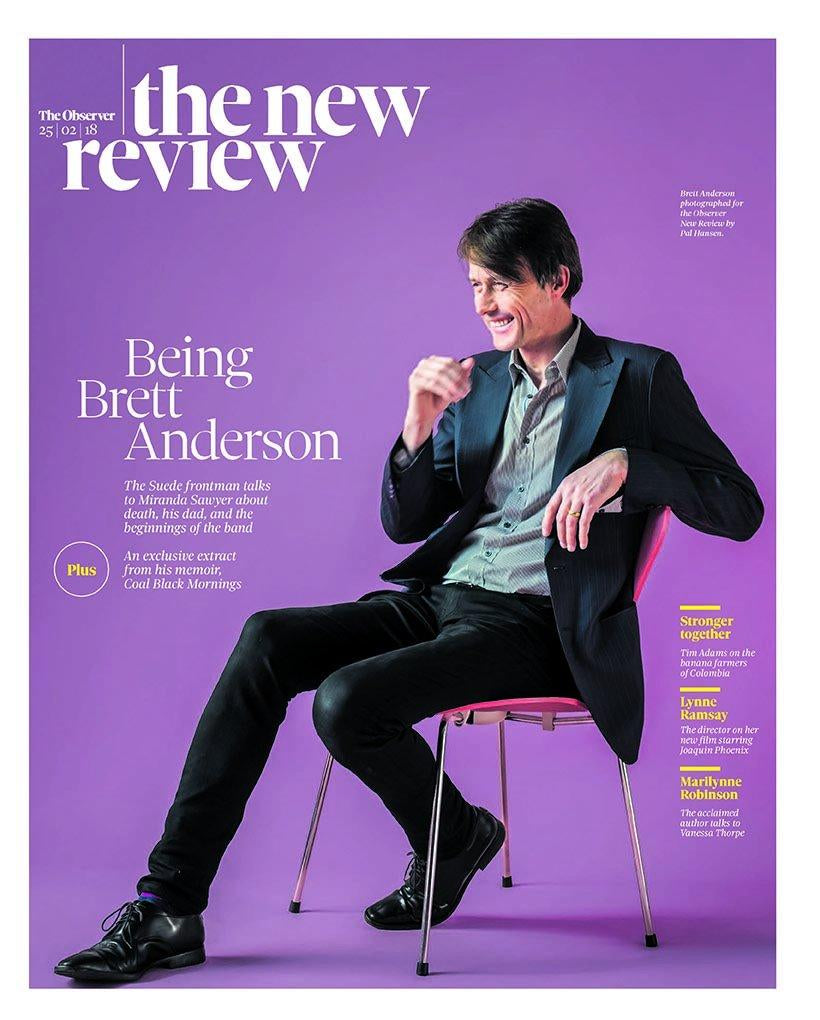
Work Experience at The Guardian/Observer New Review
Dear reader,
I write this as someone who has recently undertaken work experience at The Guardian and is still riding off the byline buzz. I am individual who seeks a lot of comfort in the internet and one of the first things I did upon receiving confirmation of my placement was to take to Google and hunt out accounts of those who have participated in similar work. No such luck. Here is a brief account of my time working at the Observer New Review for two weeks in February 2018. It's not poncey; it's a straight-up, no-frills report.
-Interviewing bookshop owners for the 'Browse a Bookshop' slot, then transcribing and writing the slot for print and online. I was given a byline here online and in print (4th March).
-Attending conference meetings for the Observer Politics, Observer Magazine and New Review.
-Researching and suggesting individuals to interview for an upcoming feature on US gun laws and mass school shootings.
-Selecting upcoming cultural highlights for albums/novels/theatre and proposing individuals to interview.
-Suggesting bookshops for the 'Browse a Bookshop' slot (10+).
This said, don't spend the hours between tasks scrolling mindlessly through social media, luckily I had uni work and other commitments to keep myself busy, but ultimately it doesn't look good or counteract the "lazy millennial" stereotype if you're vacantly gazing at a Facebook feed. I was later told that a lot of work experience placements in the building are nephews and nieces of senior editors who often become disinterested and appear bored due to high expectations. I got the impression that weekend papers/magazine work is a considerable amount less high-pressured than newsrooms for daily papers. That doesn't mean there's not work to be done.
Work hard, keeping the end in sight. There is an immense amount of satisfaction in seeing one's byline (name) in print which may make up for the fact that the work is unpaid, apart from travel expenses. I was put in the compromising position of being offered (more unpaid) work after the work experience finished; an interview to write-up over the weekend for print and online publication. This was not a decision I took lightly, seeing as I was essentially being asked to surrender more of my time for free, when I should be studying for university. In the end, I decided that this was an opportunity I could not turn down, and so obligingly completed the task for the Monday following my two week placement.
Personally, I have to work incredibly hard to offset my nerves and self-consciousness, especially in a new environment. Once you adapt yourself to this new environment, be proactive, ask questions and make small talk. If you find that you have lots of questions regarding this line of work, drop people emails and suggest going for coffee or lunch. One of the best decision I made over the two weeks was meeting with a Commissioning Editor and asking them questions about how they entered the world of journalism and which work experience opportunities they had undertaken and would recommend.
Make it clear that you're keen to attend meetings- even if no-one in the office is interested if it's not directly applicable to their specific work. It shows you're eager to learn and listen. It's also bloody fascinating and reminds you of the power which journalism wields in influencing the zeitgeist and legislation. I found a particular meeting on a special report concerning the poor state of UK prison's to be thoroughly enlightening. I admired the pragmatic approach of conference members who put forward realistic suggestions of how prisons must be improved. Also the biscuits are delicious.
*************
Any questions- drop me a line! I'm happy to discuss my time with any prospective work-experiencers. Here's to hoping we'll get paid for it someday.
I write this as someone who has recently undertaken work experience at The Guardian and is still riding off the byline buzz. I am individual who seeks a lot of comfort in the internet and one of the first things I did upon receiving confirmation of my placement was to take to Google and hunt out accounts of those who have participated in similar work. No such luck. Here is a brief account of my time working at the Observer New Review for two weeks in February 2018. It's not poncey; it's a straight-up, no-frills report.
- First day
Working hours were 10-6pm, although on the first day I was told to arrive at the office at 11am and was met in reception by one of the Editorial Administrator. It's a very impressive, foreboding glass building in a yuppie part of King's Cross. Don't be intimidated; adapt and relax. Pretend you are part of the pack and hoodwink the whole office into thinking you've been there for years. On the first day, work included extensive research for the 'Grid' feature of the New Review; an arts and photography column which selects six-eight images with a brief interview of 180 words which is available in print and online. I enthusiastically sent off eight suggestions before lunch, along with a short summary of the artist's work. These suggestions were subsequently passed around the office to see whether they may be suitable and I would later submit 25+ additional suggestions for this feature over the course of the two weeks before the final suggestion was accepted for publication on the 4th of March- Japanese photographer Osamu Yokonami's Spring series.
- Work
-Interviewing bookshop owners for the 'Browse a Bookshop' slot, then transcribing and writing the slot for print and online. I was given a byline here online and in print (4th March).
-Attending conference meetings for the Observer Politics, Observer Magazine and New Review.
-Researching and suggesting individuals to interview for an upcoming feature on US gun laws and mass school shootings.
-Selecting upcoming cultural highlights for albums/novels/theatre and proposing individuals to interview.
-Suggesting bookshops for the 'Browse a Bookshop' slot (10+).
- Advice
This said, don't spend the hours between tasks scrolling mindlessly through social media, luckily I had uni work and other commitments to keep myself busy, but ultimately it doesn't look good or counteract the "lazy millennial" stereotype if you're vacantly gazing at a Facebook feed. I was later told that a lot of work experience placements in the building are nephews and nieces of senior editors who often become disinterested and appear bored due to high expectations. I got the impression that weekend papers/magazine work is a considerable amount less high-pressured than newsrooms for daily papers. That doesn't mean there's not work to be done.
Work hard, keeping the end in sight. There is an immense amount of satisfaction in seeing one's byline (name) in print which may make up for the fact that the work is unpaid, apart from travel expenses. I was put in the compromising position of being offered (more unpaid) work after the work experience finished; an interview to write-up over the weekend for print and online publication. This was not a decision I took lightly, seeing as I was essentially being asked to surrender more of my time for free, when I should be studying for university. In the end, I decided that this was an opportunity I could not turn down, and so obligingly completed the task for the Monday following my two week placement.
Personally, I have to work incredibly hard to offset my nerves and self-consciousness, especially in a new environment. Once you adapt yourself to this new environment, be proactive, ask questions and make small talk. If you find that you have lots of questions regarding this line of work, drop people emails and suggest going for coffee or lunch. One of the best decision I made over the two weeks was meeting with a Commissioning Editor and asking them questions about how they entered the world of journalism and which work experience opportunities they had undertaken and would recommend.
Make it clear that you're keen to attend meetings- even if no-one in the office is interested if it's not directly applicable to their specific work. It shows you're eager to learn and listen. It's also bloody fascinating and reminds you of the power which journalism wields in influencing the zeitgeist and legislation. I found a particular meeting on a special report concerning the poor state of UK prison's to be thoroughly enlightening. I admired the pragmatic approach of conference members who put forward realistic suggestions of how prisons must be improved. Also the biscuits are delicious.
*************
Any questions- drop me a line! I'm happy to discuss my time with any prospective work-experiencers. Here's to hoping we'll get paid for it someday.
![]() |
| Credit: The Guardian News and Media |
Tuesday, 28 November 2017
Review: The Suppliant Women at the Young Vic: for [smiths] magazine
Ferociously executed and deliciously, faultlessly synchronised, David Greig’s revision of Aeschylus’s play, The Suppliant Women is in the spirit of the community-based original. Greig’s reworking of the text has been championed by community choruses in Edinburgh, Belfast, Newcastle and Dublin and now takes pride of place in London’s Young Vic theatre. It charts the journey of fifty women, daughters of Danaos, from Egypt to Greece fleeing forced marriage with their cousins, the “unholy sons of King Aegyptos”. The Suppliant Women presents the female condition in flight, navigating Diasporic identities under a strict patriarchal thumb. In keeping with Ancient Greek performance, the evening is prefaced by an announcement from a civic official; Conservative MP John Glen, parliamentary under-secretary for Arts, Heritage and Culture. Glen recites the names of the play’s sponsors, marking government subsidisation of the arts through percentages of ticket prices. Glen conducts a libation, pouring a bottle of red wine along the porous grey stone of the open stage, squawking “in the name of Dionysses, god of wine, rejoice!” I find the inclusion of a true-to-life politician here intriguing. When theatre is so often a place to evade reality, Glen injects realism and reminds the audience of their benevolent rulers and the cultural allocation of their taxes.
Women are at the heart of this play, and the chorus rightfully take centre stage. It is a patchwork flurry of multi-coloured women, all residents of Southwark- having trained for the play since September under the direction of Ramin Gray, choreographer Sasha Milavic Davies and vocal leader Mary King. The chorus of women largely operate as one body, only splitting off to individual voices in times of crisis, Gemma May giving a highly commendable performance as chorus leader. The use of incense, candles, torches, flapping scarves and confetti all invite a high sensory engagement. Live percussion and woodwind accompanies Greig’s rhythmically loaded language, reminiscent of Kate Tempest’s metered delivery, albeit en-masse. The women brandish suppliant branches threaded with white fabric which they use to simulate the motion of their journey by sea, swing over their heads and lay down as offerings to their recipients. The women are plagued by the violence of men, their attractive youth and their vulnerability as asylum seekers, crying “the worries of women as exiles are endless”. This speaks of a universal female condition; their only bargaining chip in the kingdom of men being the threat of self-destruction through suicide, cursing the city of Argos. This is a play that ruminates on human migration and attitudes towards migrants, transcending the historicity of the original; “if you’re a migrant the people will talk”.
"Equal power to all Women" is the triumphant closing war-cry. It is eternally relevant.
********************************
Words by Literary and Creative Editor, Ellie Potts.
--- @eldpotts
Women are at the heart of this play, and the chorus rightfully take centre stage. It is a patchwork flurry of multi-coloured women, all residents of Southwark- having trained for the play since September under the direction of Ramin Gray, choreographer Sasha Milavic Davies and vocal leader Mary King. The chorus of women largely operate as one body, only splitting off to individual voices in times of crisis, Gemma May giving a highly commendable performance as chorus leader. The use of incense, candles, torches, flapping scarves and confetti all invite a high sensory engagement. Live percussion and woodwind accompanies Greig’s rhythmically loaded language, reminiscent of Kate Tempest’s metered delivery, albeit en-masse. The women brandish suppliant branches threaded with white fabric which they use to simulate the motion of their journey by sea, swing over their heads and lay down as offerings to their recipients. The women are plagued by the violence of men, their attractive youth and their vulnerability as asylum seekers, crying “the worries of women as exiles are endless”. This speaks of a universal female condition; their only bargaining chip in the kingdom of men being the threat of self-destruction through suicide, cursing the city of Argos. This is a play that ruminates on human migration and attitudes towards migrants, transcending the historicity of the original; “if you’re a migrant the people will talk”.
"Equal power to all Women" is the triumphant closing war-cry. It is eternally relevant.
********************************
Words by Literary and Creative Editor, Ellie Potts.
--- @eldpotts
![]() |
| Photo by Stephen Cummiskey |
Tuesday, 29 March 2016
Uncool Reunion
| A regal throne, complete with colonial portrait. |
| Peculiar banquet hall, decked with ivory tusks and silver goblets. I stole a lump of sugar. |
| Old Boys. |
Two weeks ago, on
a bleak Thursday evening I packed up my tote bag and wandered over to Mayfair
wearing a t-shirt I had bought on eBay with a pair of exposed breasts on.
This was a school
reunion, an assembly of 'Old Boys' from my former school in Devon, an amusing misnomer
given that we had been invited and that the majority of the attendees
were wispy haired white men who attended in the 60s. Not my usual dig, I had
spotted the event on facebook and along with an old school friend, we met in
Soho before gracing the occasion around 8pm. Two smiley receptionists greeted
us upon our arrival, thrusting name tags into our hands and gesturing towards
the bar. There were no free drinks as the event had promised, and what the
event had also failed to alert us of was the glut of UKIP advocating Old Boys;
the chair of which bought us both drinks with some racist shrapnel and openly
sneered when following questioning I informed him I was studying at an Arts and
Humanities university. 'Most of our old boys go into Surveying! You'd be
surprised! At some of these events there can be over 100!'. I couldn't think of
anything more soul sucking.
My lovely companion,
studying languages at an esteemed red-brick university was met with noticeably
more marked 'ah!'s of approval at institution and degree, whilst I internally
sniggered away my own anxiety and adjusted my cardigan, grabbing onto the
cotton like my self-worth. True, I hadn't exactly aided the process through
choice of t-shirt.
After darting
between various other conversations with former teachers and students (we were
not only the youngest but the only women out of approximately 40) we made a
deliberate dash to the toilets where we took it upon ourselves to explore the
'banquet hall', performance quarter and bizarre imperial bathrooms (see above
images). Absurd silver trinkets and goblets alongside chandeliers and imposing
ivory tusks, this exhibition of wealth and empire was light-years away from my
charmingly gritty quarter of South East London I had grown so fond of.
I left the
occasion with a sour feeling of inadequacy, an ignored friend request, a cheek
full of kettle crisps, and the sense of having been condescended on all
components of my being through various conservative attitudes. A breeding
ground for nepotism, sexism, and a perpetuation of outdated, quaint ideals.
There's no such
thing as a free drink.
Labels:
Barnstaple,
breasts,
conservatism,
devon,
freemasons,
london,
mayfair,
old men,
ukip
Thursday, 18 February 2016
Becoming my own 14 year old icon: A revelation. or An Education in Blagging it.
I'd like to think I've done a lot since moving to London. I've served the
president of China a fish course wearing shoes that my mum bought from
Sainsburys in the 40% off TU sale. I've dug myself into an unimaginable pit of
monetary debt, I own a basil plant now, I'm a vegetarian, I've developed an
intolerance to whiskey. And, to go on, as of the previous night, I witnessed a
collective of my 2009 indie icons snort cocaine from a Soho bar to the
professionally glazed eyes of the staff. Is this truly the climax of my
adulthood? Is this making it?
Tuesday afternoon, with less than 3 hours notice I made the impromptu decision to drag my miserable body to a ~hip #music gig, following a mutual friend pulling out last minute and as bid for myself to procrastinate further the impending 3 essays I have due in for the next few weeks. This is not a pastime I have participated actively in since I was about 14 and an acne ridden resident of Brighton with a paper round and an unquenchable desire to fit in. So I ambled to Brixton with 2 cans of K cider stuffed into my trouser band and some sleek white cotton trousers [I purchased myself for a meagre £3 from the M&S Bideford outlet] we flitted between support acts and labyrinth-style smoking decks till the headline act; my ethereal puberty pinups graced the stage and I felt a sweeping hormonal déjà-vu.
The group I had been with had all shared a similar musical/maturation experience fixated round this band and we stood in a small ring for the encore and held hands in a strangely ritualistic manner. G had a lot of feelings and had a spontaneous sob to one of the more down-tempo numbers.
The hilarity-cum-internal screaming did not unfold until the gig was over, following a hapless and cripplingly awkward scene of events with a corner shop owner, lemonade, my insufferable pedantry and an unforeseen sexual remark. I screamed in the gentleman's face, holding up a stern finger and sharply threw the can back on the shelf before marching off into the Brixton night in a trail of enraged feminist fury. As fate would have it, this would lead us to the local pub, an upmarket French establishment at around 11:45pm was unremarkably heaving and upon purchasing a more expensive and non-sexist lemonade, we found ourselves a tiny booth already occupied by three unassuming young men, one clutching a tote bag brimming with records, all sporting various degrees of facial hair.
Whilst drinking this delicious lemonade we mused over the night thus far, our past experiences of live music and where we would go on from this quaint French affair. The men next to us finished their drinks and we shuffled along to allow them to exit. They filed out until the first member of the troupe was out the door, when gentleman number three dashed back to our booth, leant over and into my ear he whispered: "the after party is one 100 Wardour Street, Soho". Our heavenly hairy godmother in a paisley shirt and an earring. It was henceforth that a 2009 Indie mirage unfolded into a miraculous overdraft fuelled blur of teen heroes and free Peroni.
Following an additional misogny fuelled encounter with my fantastically resilient companion (see mid image) and a bored Brixtonian we eventually wriggled into an uber; the tax-free/mass-corporation-guilt leaving a sour taste that was distinctly obscured by the circus of butterflies in my stomach.
Living in the South East of London, it's not all too often I head into the centre of town. When I do, mostly for work purposes, I am consistently cycnical and frequently glower to myself over:
We slipped into the after party, guilt-free greeted by an entourage of 30-40 folk, huddled round a private table with waiters in grey suits and dull eyes who offered us vodka with cranberry/soda and called you ‘madam’ like a Victorian lady. In the smoking area we bumped into the men we had briefly met at the pub- it transpired they had names- Ollie Tao and Cozzie, who looked genuinely pleased to see us. We were without a doubt the only members without a direct link to the band, three thirsty and clueless young women following our noses to watch our teenage idols dissolve their septums.
I come back to the question, if my fourteen year old self could see me now would she be jumping for joy? Texting all her pals on her Nokia smart phone? I’m sorry to break the illusion Elinor but they’re really not all they’re cracked up to be, these are a gang of men in their early 30s, who probably have wives and a mortgage.
For those of you who are as ill-informed as I was, it turns out- what you do at after-parties is mingle and people ask you ‘what you do’ whilst they stare at your breasts for the response. Generally you repeat this about four times, mid-transition your previous converser will glare at your new chat mate and so the process continues.
To be brutally honest with you Martin, I still don’t really know what I’m doing, both here and in the grand scheme of my life, but once the housing bubble bursts I doubt you’ll know what you’re doing much anymore.
Cynicism triumphs again!
Tuesday afternoon, with less than 3 hours notice I made the impromptu decision to drag my miserable body to a ~hip #music gig, following a mutual friend pulling out last minute and as bid for myself to procrastinate further the impending 3 essays I have due in for the next few weeks. This is not a pastime I have participated actively in since I was about 14 and an acne ridden resident of Brighton with a paper round and an unquenchable desire to fit in. So I ambled to Brixton with 2 cans of K cider stuffed into my trouser band and some sleek white cotton trousers [I purchased myself for a meagre £3 from the M&S Bideford outlet] we flitted between support acts and labyrinth-style smoking decks till the headline act; my ethereal puberty pinups graced the stage and I felt a sweeping hormonal déjà-vu.
The group I had been with had all shared a similar musical/maturation experience fixated round this band and we stood in a small ring for the encore and held hands in a strangely ritualistic manner. G had a lot of feelings and had a spontaneous sob to one of the more down-tempo numbers.
The hilarity-cum-internal screaming did not unfold until the gig was over, following a hapless and cripplingly awkward scene of events with a corner shop owner, lemonade, my insufferable pedantry and an unforeseen sexual remark. I screamed in the gentleman's face, holding up a stern finger and sharply threw the can back on the shelf before marching off into the Brixton night in a trail of enraged feminist fury. As fate would have it, this would lead us to the local pub, an upmarket French establishment at around 11:45pm was unremarkably heaving and upon purchasing a more expensive and non-sexist lemonade, we found ourselves a tiny booth already occupied by three unassuming young men, one clutching a tote bag brimming with records, all sporting various degrees of facial hair.
Whilst drinking this delicious lemonade we mused over the night thus far, our past experiences of live music and where we would go on from this quaint French affair. The men next to us finished their drinks and we shuffled along to allow them to exit. They filed out until the first member of the troupe was out the door, when gentleman number three dashed back to our booth, leant over and into my ear he whispered: "the after party is one 100 Wardour Street, Soho". Our heavenly hairy godmother in a paisley shirt and an earring. It was henceforth that a 2009 Indie mirage unfolded into a miraculous overdraft fuelled blur of teen heroes and free Peroni.
Following an additional misogny fuelled encounter with my fantastically resilient companion (see mid image) and a bored Brixtonian we eventually wriggled into an uber; the tax-free/mass-corporation-guilt leaving a sour taste that was distinctly obscured by the circus of butterflies in my stomach.
Living in the South East of London, it's not all too often I head into the centre of town. When I do, mostly for work purposes, I am consistently cycnical and frequently glower to myself over:
- tourists
- literally anything in a suit,
- imposing buildings
- people who have clearly spent more than they would have done on a book on a handbag
- anyone who looks remotely like they might have voted Conservative in the previous election.
We slipped into the after party, guilt-free greeted by an entourage of 30-40 folk, huddled round a private table with waiters in grey suits and dull eyes who offered us vodka with cranberry/soda and called you ‘madam’ like a Victorian lady. In the smoking area we bumped into the men we had briefly met at the pub- it transpired they had names- Ollie Tao and Cozzie, who looked genuinely pleased to see us. We were without a doubt the only members without a direct link to the band, three thirsty and clueless young women following our noses to watch our teenage idols dissolve their septums.
I come back to the question, if my fourteen year old self could see me now would she be jumping for joy? Texting all her pals on her Nokia smart phone? I’m sorry to break the illusion Elinor but they’re really not all they’re cracked up to be, these are a gang of men in their early 30s, who probably have wives and a mortgage.
For those of you who are as ill-informed as I was, it turns out- what you do at after-parties is mingle and people ask you ‘what you do’ whilst they stare at your breasts for the response. Generally you repeat this about four times, mid-transition your previous converser will glare at your new chat mate and so the process continues.
To be brutally honest with you Martin, I still don’t really know what I’m doing, both here and in the grand scheme of my life, but once the housing bubble bursts I doubt you’ll know what you’re doing much anymore.
Cynicism triumphs again!
Subscribe to:
Posts (Atom)