Propelled by the anxious collision of psychological expression and repression, Mood Music interrogates the boundaries of creative ownership and the extent to which we are emotionally invested in our artistic products. Written by Joe Penhall (Sunny Afternoon, Blue/Orange) and directed by Roger Michell, the piece chronicles the ego-clash of producer Bernard (Ben Chaplin) and wide-eyed vocalist and protégé, Cat (Seána Kerslake). After moving to London from her native Dublin, Cat is scouted by the esteemed producer who promises fanciful collaborations, avowing that he is “no stranger to excitement”. Dialogue splices between conversations with their respective doting psychotherapists (Jemma Redgrave and Pip Carter) on a stage decked with a low ceiling of vintage microphones.
The relationship between the two soon turns sour. Cat becomes increasingly demystified by the façade of musical success and pines for a ‘purer’ method of musical expression to spiritually reconnect with her deceased father. Studio quarrels are spurned by Bernard’s self-assured musical machismo and confident misogyny. The trope is all too familiar and he is superbly repugnant. The declaration by Bernard’s Lawyer (Neil Stuke) that “It’s time to change the balance of power… within reason” illustrates the extent to which misogyny is embedded in the operation of the music industry and manifests throughout the play’s legal struggles and the propagation of Bernard’s intuitive ‘genius’. “We’re essentially midwives, but the songs are our babies” he affirms. In this, and other references to songs as his “babies”, we see the heart of Bernard’s quest to erase female presence and stabilise his unstable identity. Chaplin’s performance garners audience chuckles, which I suppose is either rooted in his brashly exuding charm or their own reflective identification. I’m impressed, but as a young female creative I’m far from amused.
Ultimately Cat descends into substance dependency in the midst of legal toils as she struggles to rationalise her trauma. There are moments when the language feels cheap, underscoring the soulless performativity of the industry as Bernard philosophises “Sometimes the dark heart of a song can never be known because frankly it’s too squalid”. For a play centred on the production and performance of music, there is surprisingly little actual music, albeit a sorrowful string-ensemble conducted by Cat which concludes the evening and injects a grain of optimism to the story of female creative and legal oppression. Whilst it might be a bitter pill to swallow, Mood Music is a timely rumination on the purpose of psychotherapy under capitalism and its use in fostering creative production and profit at the expense of those too weak to speak out.
*************
Written for A Younger Theatre magazine, link here: https://www.ayoungertheatre.com/review-mood-music-the-old-vic/
Sunday, 20 May 2018
Saturday, 5 May 2018
And What Are You Going To Do With Your English Degree?
![]() |
| Credit; Stockimage |
The corners of my mind which aren’t perpetually imploding under the
strain of my dissertation are consumed by thoughts of life post-graduation. Two
months ago, I sent an innumerable tirade of emails to literary agencies and
publishers in and around Greater London, requesting an interim placement. I have worked for the sum of two full months on unpaid work
experiences throughout my time as an undergraduate student, performing tasks that
have ranged from selecting novel submissions, to researching survivors of mass school
shootings, to assembling a flatpack Argos bookcase and moderating Jacqueline
Wilson’s email account. I attached copies of my CV to these emails, those finely-tuned
hand-crafted emblems of my worth, honeyed with meticulously tailored covering
letters for each prospective company. I received only two responses, one of
which subsequently agreed to meet with me and offered me one month’s work, unpaid,
for two days a week. I chased up the offer with a friendly email, seeking to confirm
dates. I was more than a little surprised when they responded:
“We’ve been incredibly busy
and we can no longer accommodate you…”
I took twenty two hours to formulate a response, ruminating over the time and money I had spent travelling to the offices, meeting with the company owner and firmly shaking their hand by way of cheery confirmation. After deliberating over
the line “I feel like you’ve wasted both my time and money for the promise of unpaid
work”, I decided to keep it in. Their response was wildly, blindingly ignorant
to the difficulties of gaining any kind of work in the creative industries. It
began, “Wow, Elinor!” dripping
with the sneering condescension of a school teacher, reprimanding me for my churlish
misdemeanours.
Sure, I am a privileged, cis, white, able-bodied female, so I may run
the risk of sounding entitled when I whine. But when you’ve racked up months of
‘experience’ with nothing but notches on you CV, it would be nice to think that
someday you won’t be continuously turned down for offers of your free labour. If
this degree has given me anything it’s a bloody work ethic, persistence and
half a stone in weight. As I retire from three years (£27,000+) at Goldsmiths, I implore those
of you continuing your studies to know your worth. Don’t work for dickheads if
you can at all help it, and for the love of God, be kind to your fellow human.
I’ll spend my summer broke and disillusioned, re-potting and scattering
grass seed between crisp packets. Mother Nature won’t slap me on the wrist for speaking
out of line. I will stay in my garden until I have lived off my loan whilst the
city of London crumbles around me.
BLAST FROM THE PAST: Mac DeMarco 'Salad Days' Album Review 2014
Here's one that slipped the net- an album review for the Exeter Daily published in 2014. Seeing as I'm using this space as an online portfolio I thought I may as well slide this one in. It's tremendously succinct for an album review, but I imagine that I spent a great deal of time tirelessly fretting over each individual word. Here's to writing more and getting ...slowly... better.
https://www.theexeterdaily.co.uk/news/entertainment-reviews/mac-demarco-salad-days-album-review
Mac DeMarco 'Salad Days' Album Review
An effortlessly lazy third album from tousled Canadian blue-waver DeMarco, Salad Days sees a daydreaming melange of lulling guitars glazed with Sunday morning vocals delivered through a hungover smile.
Opening track ‘Salad Days’ is an upbeat lament similarly as ‘Let Her Go’ carries a sunshine feel despite lyrical sadness.
Lo-Fi and nonchalant, the record is brushed with psychedelic tones with ‘Brother’ and stand out track ‘Chamber of Reflection’ exercising this with much of a continuation of the sounds heard on 2012’s ‘2’.
Penultimate ‘Go Easy’ is synonymous with the record as a laid back, easy breezy summertime gem. 7/10
https://www.theexeterdaily.co.uk/news/entertainment-reviews/mac-demarco-salad-days-album-review
Saturday, 21 April 2018
Review: Rush, Pentire Street Productions
Burrowed under the arches of the Barons Court Theatre, Rush is a heady excursion through the trials of modern millennial life, exploring the intersections of technology and mental health. Written and performed by Tiwalade Ibirogba-Olulode, it follows the stories of ‘Alex’, a name used by multiple characters to interrogate social attitudes towards anxiety and depression. Ibirogba-Olulode, Eve Atkinson, Brandon Grace, Hannah Dunlop and Oseloka Obi carry Alex’s narrative from scene-to-scene. There is an unsavoury blending of comedic elements with perverse and abject moments, which sits a little uneasy at times.
The evening is fronted with a small musical ensemble playing covers of Destiny’s Child, Shakira and Britney Spears. Whilst these are accomplished renditions, they do feel somewhat mismatched with the stern subject matter which the play puts forth. The opening scene praises the audience for their social media use and ruminates on the cultural desire for online gratification. There is a sardonic declaration, “You are so, so special!”. The play weaves between scenes of social isolation, from a grotesque depiction of child abuse in a primary school to a jovial Tinder ‘how-to’. It loosely charts Alex’s maturation and continued seclusion through a cultural misunderstanding of mental health.
The lack of communication around mental wellbeing is confidently visualised in the family scene, where Ibirogba-Olulode and Obi play Alex’s parents and implore their child to pray after recounting mental health issues. The dialogue is sarcastically saturated with a disdain for middle-class potpourri predilections, Ibirogba-Olulode despairing that, “I put Citrus Zing in the kitchen!”. Ibirogba-Olulode later explains that this scene had been the most resonant with her own personal navigation of anxiety and depression in a strictly religious Nigerian household.
Physical movement is thoughtfully articulated with direction from James Monckton and Sussan Sanii. This is particularly outstanding in the bird scene, proving that one can explore ambitious metaphors even on a shoestring budget. The interpretive dance using the white light of iPhones is artfully executed and sound-tracked by Ellie Smit’s original compositions, drawing on electronic sequencing. Physical comedy is brilliantly staged by Obi in the Tinder dating scene and Hannah Dunlop’s Alex in the WTF News scene is disquietingly excellent.
The play ends with a scene of sexual exploitation between a theatre student and their mentor, a passage which Ibirogba-Olulode penned pre-Weinstein and the #MeToo movement. This book-ends the opening image of abuse and is a bleak, fatalistic concluding image which evades an inspection of the victim’s narrative or indeed the psychology of the perpetrator. Whilst the play outlines society’s agglomeration of ‘mental health issues’, it did not undermine this narrative and feels unfortunately fatalistic. Whilst technically good, the sensitive subject matter could have been more deftly handled.
Rush will be playing at The Space Theatre, London from 21-25 August. Further details and booking information will be coming to the website soon.
Photo: Pentire Street Productions
Written for A Younger Theatre.
https://ayoungertheatre.com/review-rush-pentire-street-productions/
Friday, 6 April 2018
Hamlet in Hackney
The RSC’s run of Hamlet at the Hackney Empire is a successfully ambitious transplant to modern West Africa. Paapa Essiedu commands the title role, and at the tender age of 27, is the RSC’s first black actor to play Hamlet for the company. Essiedu offers a moving and nuanced portrait of Shakespeare’s despairing Dane, ruminating on the stages of grief.
The play loosely begins in Wittenberg University upon Hamlet’s graduation, before a heady succession of flashes show a glass-encased body (the late King Hamlet) before placing the action firmly in African Elsinore’s city limits.
Simon Godwin’s direction takes Hamlet on an intriguingly creative avenue for theatre’s notoriously philosophising misanthrope. Godwin paints a fresh Hamlet, doing away with the introspective philosopher and articulating him more as a tortured artist; incapable of expressing the depths of his loss. There are explicit allusions to Basquiat in the production, as Hamlet mounts the throne to spray-paint a pink ‘H’ and crown on the imposing portrait of Gertrude and Claudius, overlooking the court. As insanity tightens its grip, Hamlet styles himself like a Neo-Expressionist in a gaudy blazer splashed with neon paint, surrounded by discarded mattresses and colourful drapes emblazoned with skulls, dinosaurs and edgy slogans. Essiedu recites the play’s notorious soliloquy, pontificating with an artist’s palate in hand.
There are some moments of excellency dampened by less convincing accompaniments. The decision to cast a female Guildenstern (Eleanor Wyld) and the allusion to a previous romantic relationship between herself and Hamlet feels somewhat misplaced, fails to enrich or advance the narrative, and reduces Rosencrantz to little more than a gormless fly-on-the-wall.
Whilst the ‘Get thee to a nunnery’ scene feels somewhat saturated in Ophelia’s attempts to blindly seduce Hamlet (despite his heart-breaking scorn), Mimi Ndiweni convincingly depicts Ophelia's woeful descent from youthful optimism to fervid mania. This reaches a gruesome climax in Ophelia’s ‘flowers’ speech where the noted plants are sardonically exchanged for segments of her weave, each one torn, grimly, from her head.
This is a bold staging that injects boundless colour and buzzing musicality to Shakespeare’s most contrary of heroes.
*********
You can see Hamlet at the Hackney Empire until the 31st March https://hackneyempire.co.uk/whats-on/hamlet-royal-shakespeare-company/
Words, Senior Literary Editor Ellie Potts- @eldpotts
The play loosely begins in Wittenberg University upon Hamlet’s graduation, before a heady succession of flashes show a glass-encased body (the late King Hamlet) before placing the action firmly in African Elsinore’s city limits.
Simon Godwin’s direction takes Hamlet on an intriguingly creative avenue for theatre’s notoriously philosophising misanthrope. Godwin paints a fresh Hamlet, doing away with the introspective philosopher and articulating him more as a tortured artist; incapable of expressing the depths of his loss. There are explicit allusions to Basquiat in the production, as Hamlet mounts the throne to spray-paint a pink ‘H’ and crown on the imposing portrait of Gertrude and Claudius, overlooking the court. As insanity tightens its grip, Hamlet styles himself like a Neo-Expressionist in a gaudy blazer splashed with neon paint, surrounded by discarded mattresses and colourful drapes emblazoned with skulls, dinosaurs and edgy slogans. Essiedu recites the play’s notorious soliloquy, pontificating with an artist’s palate in hand.
There are some moments of excellency dampened by less convincing accompaniments. The decision to cast a female Guildenstern (Eleanor Wyld) and the allusion to a previous romantic relationship between herself and Hamlet feels somewhat misplaced, fails to enrich or advance the narrative, and reduces Rosencrantz to little more than a gormless fly-on-the-wall.
Whilst the ‘Get thee to a nunnery’ scene feels somewhat saturated in Ophelia’s attempts to blindly seduce Hamlet (despite his heart-breaking scorn), Mimi Ndiweni convincingly depicts Ophelia's woeful descent from youthful optimism to fervid mania. This reaches a gruesome climax in Ophelia’s ‘flowers’ speech where the noted plants are sardonically exchanged for segments of her weave, each one torn, grimly, from her head.
This is a bold staging that injects boundless colour and buzzing musicality to Shakespeare’s most contrary of heroes.
*********
You can see Hamlet at the Hackney Empire until the 31st March https://hackneyempire.co.uk/whats-on/hamlet-royal-shakespeare-company/
Words, Senior Literary Editor Ellie Potts- @eldpotts
Thursday, 8 March 2018
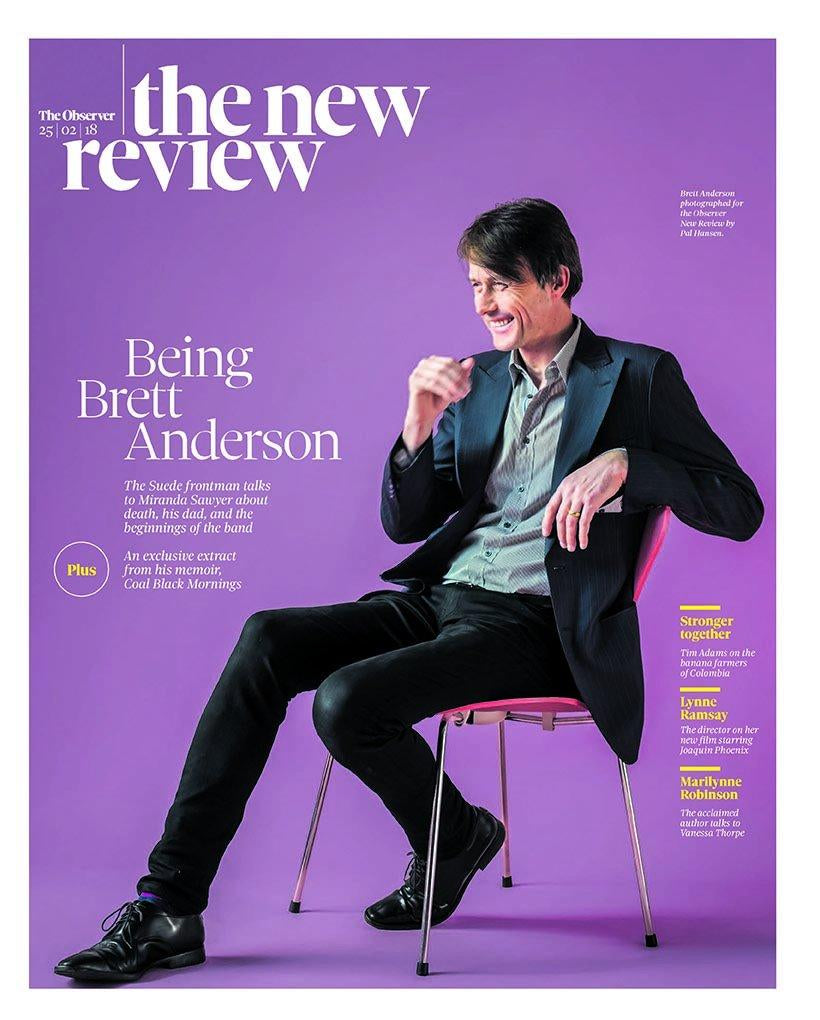
Work Experience at The Guardian/Observer New Review
Dear reader,
I write this as someone who has recently undertaken work experience at The Guardian and is still riding off the byline buzz. I am individual who seeks a lot of comfort in the internet and one of the first things I did upon receiving confirmation of my placement was to take to Google and hunt out accounts of those who have participated in similar work. No such luck. Here is a brief account of my time working at the Observer New Review for two weeks in February 2018. It's not poncey; it's a straight-up, no-frills report.
-Interviewing bookshop owners for the 'Browse a Bookshop' slot, then transcribing and writing the slot for print and online. I was given a byline here online and in print (4th March).
-Attending conference meetings for the Observer Politics, Observer Magazine and New Review.
-Researching and suggesting individuals to interview for an upcoming feature on US gun laws and mass school shootings.
-Selecting upcoming cultural highlights for albums/novels/theatre and proposing individuals to interview.
-Suggesting bookshops for the 'Browse a Bookshop' slot (10+).
This said, don't spend the hours between tasks scrolling mindlessly through social media, luckily I had uni work and other commitments to keep myself busy, but ultimately it doesn't look good or counteract the "lazy millennial" stereotype if you're vacantly gazing at a Facebook feed. I was later told that a lot of work experience placements in the building are nephews and nieces of senior editors who often become disinterested and appear bored due to high expectations. I got the impression that weekend papers/magazine work is a considerable amount less high-pressured than newsrooms for daily papers. That doesn't mean there's not work to be done.
Work hard, keeping the end in sight. There is an immense amount of satisfaction in seeing one's byline (name) in print which may make up for the fact that the work is unpaid, apart from travel expenses. I was put in the compromising position of being offered (more unpaid) work after the work experience finished; an interview to write-up over the weekend for print and online publication. This was not a decision I took lightly, seeing as I was essentially being asked to surrender more of my time for free, when I should be studying for university. In the end, I decided that this was an opportunity I could not turn down, and so obligingly completed the task for the Monday following my two week placement.
Personally, I have to work incredibly hard to offset my nerves and self-consciousness, especially in a new environment. Once you adapt yourself to this new environment, be proactive, ask questions and make small talk. If you find that you have lots of questions regarding this line of work, drop people emails and suggest going for coffee or lunch. One of the best decision I made over the two weeks was meeting with a Commissioning Editor and asking them questions about how they entered the world of journalism and which work experience opportunities they had undertaken and would recommend.
Make it clear that you're keen to attend meetings- even if no-one in the office is interested if it's not directly applicable to their specific work. It shows you're eager to learn and listen. It's also bloody fascinating and reminds you of the power which journalism wields in influencing the zeitgeist and legislation. I found a particular meeting on a special report concerning the poor state of UK prison's to be thoroughly enlightening. I admired the pragmatic approach of conference members who put forward realistic suggestions of how prisons must be improved. Also the biscuits are delicious.
*************
Any questions- drop me a line! I'm happy to discuss my time with any prospective work-experiencers. Here's to hoping we'll get paid for it someday.
I write this as someone who has recently undertaken work experience at The Guardian and is still riding off the byline buzz. I am individual who seeks a lot of comfort in the internet and one of the first things I did upon receiving confirmation of my placement was to take to Google and hunt out accounts of those who have participated in similar work. No such luck. Here is a brief account of my time working at the Observer New Review for two weeks in February 2018. It's not poncey; it's a straight-up, no-frills report.
- First day
Working hours were 10-6pm, although on the first day I was told to arrive at the office at 11am and was met in reception by one of the Editorial Administrator. It's a very impressive, foreboding glass building in a yuppie part of King's Cross. Don't be intimidated; adapt and relax. Pretend you are part of the pack and hoodwink the whole office into thinking you've been there for years. On the first day, work included extensive research for the 'Grid' feature of the New Review; an arts and photography column which selects six-eight images with a brief interview of 180 words which is available in print and online. I enthusiastically sent off eight suggestions before lunch, along with a short summary of the artist's work. These suggestions were subsequently passed around the office to see whether they may be suitable and I would later submit 25+ additional suggestions for this feature over the course of the two weeks before the final suggestion was accepted for publication on the 4th of March- Japanese photographer Osamu Yokonami's Spring series.
- Work
-Interviewing bookshop owners for the 'Browse a Bookshop' slot, then transcribing and writing the slot for print and online. I was given a byline here online and in print (4th March).
-Attending conference meetings for the Observer Politics, Observer Magazine and New Review.
-Researching and suggesting individuals to interview for an upcoming feature on US gun laws and mass school shootings.
-Selecting upcoming cultural highlights for albums/novels/theatre and proposing individuals to interview.
-Suggesting bookshops for the 'Browse a Bookshop' slot (10+).
- Advice
This said, don't spend the hours between tasks scrolling mindlessly through social media, luckily I had uni work and other commitments to keep myself busy, but ultimately it doesn't look good or counteract the "lazy millennial" stereotype if you're vacantly gazing at a Facebook feed. I was later told that a lot of work experience placements in the building are nephews and nieces of senior editors who often become disinterested and appear bored due to high expectations. I got the impression that weekend papers/magazine work is a considerable amount less high-pressured than newsrooms for daily papers. That doesn't mean there's not work to be done.
Work hard, keeping the end in sight. There is an immense amount of satisfaction in seeing one's byline (name) in print which may make up for the fact that the work is unpaid, apart from travel expenses. I was put in the compromising position of being offered (more unpaid) work after the work experience finished; an interview to write-up over the weekend for print and online publication. This was not a decision I took lightly, seeing as I was essentially being asked to surrender more of my time for free, when I should be studying for university. In the end, I decided that this was an opportunity I could not turn down, and so obligingly completed the task for the Monday following my two week placement.
Personally, I have to work incredibly hard to offset my nerves and self-consciousness, especially in a new environment. Once you adapt yourself to this new environment, be proactive, ask questions and make small talk. If you find that you have lots of questions regarding this line of work, drop people emails and suggest going for coffee or lunch. One of the best decision I made over the two weeks was meeting with a Commissioning Editor and asking them questions about how they entered the world of journalism and which work experience opportunities they had undertaken and would recommend.
Make it clear that you're keen to attend meetings- even if no-one in the office is interested if it's not directly applicable to their specific work. It shows you're eager to learn and listen. It's also bloody fascinating and reminds you of the power which journalism wields in influencing the zeitgeist and legislation. I found a particular meeting on a special report concerning the poor state of UK prison's to be thoroughly enlightening. I admired the pragmatic approach of conference members who put forward realistic suggestions of how prisons must be improved. Also the biscuits are delicious.
*************
Any questions- drop me a line! I'm happy to discuss my time with any prospective work-experiencers. Here's to hoping we'll get paid for it someday.
![]() |
| Credit: The Guardian News and Media |
Tuesday, 6 March 2018
Review: Jess Thom, Not I at the Battersea Arts Centre
Nestled in the rafters of the Battersea Arts Centre, Jess Thom’s Touretteshero production of Not I shelters from a wintry blizzard. The critic’s darling, Thom’s production first debuted at the Edinburgh Council Showcase as part of the city’s Fringe festival in 2017. Now three performances into a three-week residency, Thom is beaming to a soundtrack of Akala’s Fire in The Booth. She welcomes audience members to take a seat and chirpily declares, tics and all, that us snow-faring spectators will “receive a badge of [foreskin] honour for braving the arctic conditions”. As I take my cushion, Thom introduces herself as a “30 something white woman of average build in a very cool wheelchair, and in a black outfit”. “I also have Tourette’s syndrome,” she continues, “which means I have.. [Kate Winslet].” She smiles and laughs, permitting chortles from the smattering of nervous, senior Beckett academics occupying the backseats. She is accompanied by Charmaine, a British Sign Langauge performer and interpreter who describes herself as “a mixed-race woman in my thirties, also dressed in black”.
It is clear from the offset that the accessibility of the performance has been thoroughly, thoughtfully considered. Exits are marked out for audience members who find the performance too disturbing, as well as noise-cancelling headphones being pointed out. Thom soothes us with the observation that Beckett “wanted the play to work on the audiences’ nerves, not their intellect”. And she’s right on the pulse. The performance is arresting and interspersed (of course) with Thom’s tics’. These manifest as biscuit and hedgehog and appear most commonly in Beckett’s ellipsis. To accommodate for her physical tics, Thom is elevated whilst in her wheel chair; in keeping with the stage directions for Mouth to be eight-feet above stage level. Thom is a hypnotic Mouth, in the sense that one can’t help but slump into a dream-like state as the monologue drifts from one traumatic vignette to another. Narrative is spliced with a morose, disoriented amnesia. Charmaine dutifully signs.
Thom’s performance is followed by the screening of a documentary. In this, Thom speaks with the late Beckett scholar Rosemary Poutney, introduces company members of Touretteshero as well as citing UK Grime as an influence on her delivery of Mouth’s monologue. We follow Thom’s personal backstory and deep, lived attraction to the text. “For a long time, I thought theatre wasn’t a place I could exist” she says, “I wanted to occupy the only seat in the theatre I wouldn’t be asked to leave”. Thom encourages audience members to make conversation with their neighbours and to discuss their thoughts regarding the performance, before opening the floor up to a Q&A. Commentators praise her unique reclamation of the text. She speaks on the importance of visualising disabled people in theatre spaces. Thom has the last word, stating “people are disabled by attitudes that don’t accept people who are different”.
This is an inventive staging of Beckett’s 1972 verbal ambush, which brilliantly reconceptualises the elusive Mouth and questions the conservatism towards productions of Beckett’s work. This is a radical task, where Samuel Beckett’s infamously stubborn legacy as a playwright and director so frequently informs the staging of his work, to the letter. Thom and Touretteshero underscore the humanity at the core of the monologue as one that is both universal, and, specifically analogous with the experiences of disabled peoples.
********
Words, Ellie Potts.
WRITTEN FOR [SMITHS] MAGAZINE
It is clear from the offset that the accessibility of the performance has been thoroughly, thoughtfully considered. Exits are marked out for audience members who find the performance too disturbing, as well as noise-cancelling headphones being pointed out. Thom soothes us with the observation that Beckett “wanted the play to work on the audiences’ nerves, not their intellect”. And she’s right on the pulse. The performance is arresting and interspersed (of course) with Thom’s tics’. These manifest as biscuit and hedgehog and appear most commonly in Beckett’s ellipsis. To accommodate for her physical tics, Thom is elevated whilst in her wheel chair; in keeping with the stage directions for Mouth to be eight-feet above stage level. Thom is a hypnotic Mouth, in the sense that one can’t help but slump into a dream-like state as the monologue drifts from one traumatic vignette to another. Narrative is spliced with a morose, disoriented amnesia. Charmaine dutifully signs.
Thom’s performance is followed by the screening of a documentary. In this, Thom speaks with the late Beckett scholar Rosemary Poutney, introduces company members of Touretteshero as well as citing UK Grime as an influence on her delivery of Mouth’s monologue. We follow Thom’s personal backstory and deep, lived attraction to the text. “For a long time, I thought theatre wasn’t a place I could exist” she says, “I wanted to occupy the only seat in the theatre I wouldn’t be asked to leave”. Thom encourages audience members to make conversation with their neighbours and to discuss their thoughts regarding the performance, before opening the floor up to a Q&A. Commentators praise her unique reclamation of the text. She speaks on the importance of visualising disabled people in theatre spaces. Thom has the last word, stating “people are disabled by attitudes that don’t accept people who are different”.
This is an inventive staging of Beckett’s 1972 verbal ambush, which brilliantly reconceptualises the elusive Mouth and questions the conservatism towards productions of Beckett’s work. This is a radical task, where Samuel Beckett’s infamously stubborn legacy as a playwright and director so frequently informs the staging of his work, to the letter. Thom and Touretteshero underscore the humanity at the core of the monologue as one that is both universal, and, specifically analogous with the experiences of disabled peoples.
********
Words, Ellie Potts.
WRITTEN FOR [SMITHS] MAGAZINE
![]() |
| Credit: Wellcome Collection |
Subscribe to:
Posts (Atom)